
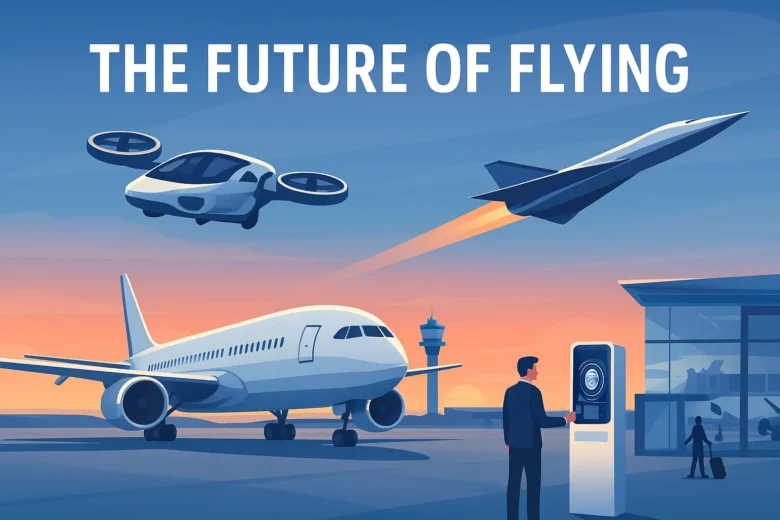
Air travel is changing faster than ever, and by the time we reach 2030, the Future of Flying will look dramatically different from what we know today. With rapid advancements in artificial intelligence, sustainability, robotics, and passenger experience technology, the skies of tomorrow will be smarter, smoother, and far more efficient. As we explore what the coming decade holds, it becomes clear that the Future of Flying is not just exciting but also revolutionary.
AI-Powered Aircraft: How Smart Planes Will Redefine the Future of Flying
Artificial intelligence will play a key role in shaping the Future of Flying. Airlines are already testing AI co-pilots that can analyze weather, fuel consumption, and safety patterns in real time. By 2030, AI-assisted operations may become the norm, helping pilots make faster decisions and improving overall efficiency.
Moreover, airports will rely on AI to manage traffic, automate check-ins, predict delays, and even enhance security screenings. As a result, flying will become smoother and far less stressful for travelers.
Sustainable Aviation: Green Innovations Leading the Next Era of Air Travel
If there is one major shift coming, it is sustainability. The Future of Flying will depend heavily on clean energy solutions that reduce emissions without compromising performance. Hydrogen-powered aircraft, electric engines, and biofuel-driven flights are already in development.
Additionally, lightweight aircraft frames and advanced aerodynamics will help airlines cut fuel usage dramatically. As aviation becomes greener, travelers will experience eco-friendly flying at more affordable prices.
Hyper-Efficient Airports: Faster, Smarter, and More Personalized
By 2030, airports will look more like high-tech hubs than crowded transit points. With biometric verification, self-driving shuttle pods, robot assistants, and automated baggage systems, the next generation of air travel will be faster and far more streamlined.
Furthermore, smart gates will eliminate long queues, while digital IDs will replace passports in many countries. Personalized alerts, contactless boarding, and AI-based lounge systems will also make the airport experience effortless.
Passenger Comfort Upgraded: The Future of In-Flight Experience
The Future of Flying does not stop at efficiency—it also focuses on comfort. Airlines are testing innovations such as noise-canceling cabins, customizable lighting, VR entertainment, and smart seats that monitor posture and fatigue.
In addition, long-haul flights may offer private sleep pods, interactive screens, and nutritional meal plans optimized for jet lag reduction. As the in-flight experience continues to evolve, passengers will enjoy a journey that feels smoother and more personalized than ever.
Supersonic Travel Returns: Flying Faster Than Ever
Supersonic jets are making a comeback, and by 2030, travelers may fly from Dubai to London in under four hours. These next-generation aircraft promise quieter engines, reduced emissions, and improved fuel efficiency—addressing the concerns that ended the Concorde era.
Supersonic technology will open the door to faster global connectivity and transform business travel forever.
Urban Air Mobility: Flying Taxis and Short-Distance Air Routes
Small electric air taxis, often referred to as eVTOLs (electric vertical take-off and landing), will reshape travel between cities. These futuristic vehicles are designed to reduce road traffic and help passengers reach airports in minutes instead of hours.
As urban air mobility grows, flying taxis will become a key feature of the Future of Flying, offering fast and convenient short-distance travel.
FAQs
1. What will air travel look like by 2030?
By 2030, air travel will be smarter, more sustainable, and significantly faster. Expect AI-powered aircraft, eco-friendly engines, automated airports, and advanced passenger comfort.
2. Will AI replace human pilots in the future?
AI will assist pilots but will not fully replace them anytime soon. Human pilots will remain essential for decision-making, while AI enhances safety and efficiency.
3. Are electric airplanes possible?
Yes. Many companies are testing electric and hybrid-electric aircraft. By 2030, short-distance electric flights may become common.
4. Will flying become cheaper in the future?
As technology becomes more efficient and fuel usage drops, flight prices may decrease. However, premium futuristic features may add optional costs.
5. Can flying taxis become a reality?
Electric air taxis are already in development. They are expected to operate in major cities by 2030, improving short-distance travel and airport connectivity.
1 Comment